
 Μake us preferred on Google
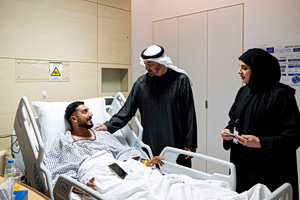
 The president of the United Arab Emirates, Sheikh Mohamed bin Zayed , strolled through the sprawling Dubai Mall on March 2, reassuring shoppers they had nothing to fear.
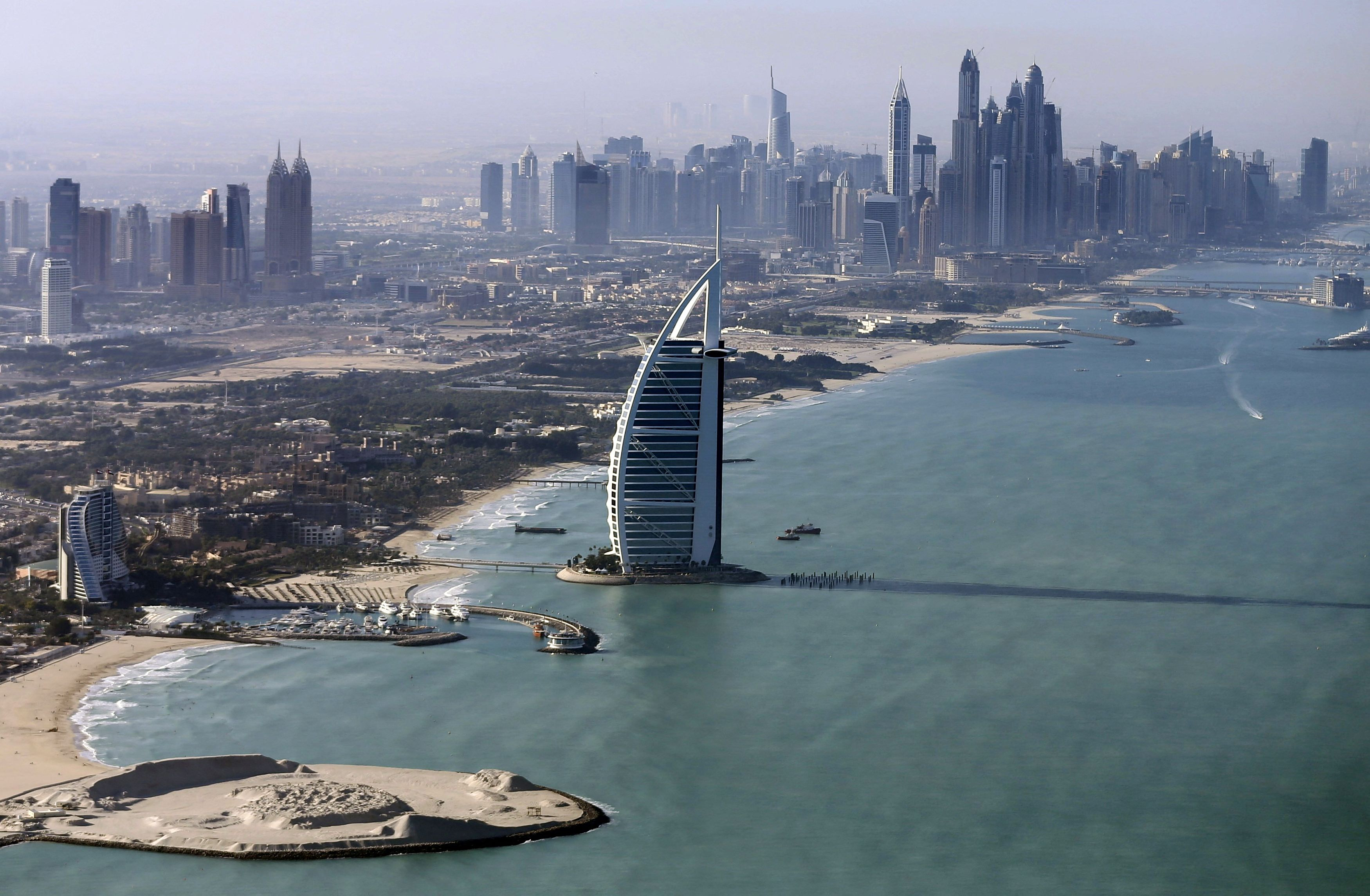
Iranian missiles and drones had been falling on the glittering city for days, shutting down the airport, striking the iconic Burj Al Arab hotel and Dubai’s deep-water port, and killing several people across the U.A.E.
Sheikh Mohamed shook hands with children and rode the mall’s crowded escalators. “Are you happy?” he asked one shopper from Ghana. “Very happy,” came the reply.
“All is well in the U.A.E.,” Sheikh Mohamed declared at a public appearance a few days later.
It is anything but.
Dubai became one of the world’s biggest, richest and gaudiest financial centers on the back of a simple idea: Despite being located in a volatile region, it was impervious to conflict—a haven of stability untouched by the wars, corruption and upheaval around it.
Its success inspired imitators in the region, including Saudi Arabia and Qatar, which have followed similar paths toward Western-friendly growth as they try to diversify their economies beyond fossil fuels.
The Iran war has punctured the notion that towering skyscrapers, financial clout and the embrace of luxury and diversity in the Persian Gulf can act as impenetrable shields against the region’s turmoil. The impact is already evident.
Asset managers and lawyers are fielding calls from people looking to move money to safer regions. Real-estate deals are on hold. Expats are questioning whether it still makes sense to put down roots .
Even if the missiles and drones stop falling, the lingering risk from a hostile Iran remains a disruptive threat.
“A drone a day keeps Gulf stability at bay,” said Andreas Krieg , a senior lecturer at the School of Security Studies at King’s College London.
Quinten François , a 30-year-old cryptocurrency analyst, evacuated to Bangkok after enduring what he called “a really grim atmosphere,” punctuated by the constant noise of fighter jets and explosions.
“In five years, when people are considering moving to Dubai, they will still think about it,” said François, who moved there in 2024. “Stuff like this is not forgotten easily.”
‘The region woke up’
Saudi Arabia is particularly at risk. The kingdom’s multitrillion-dollar plan to diversify—known as Vision 2030—aimed to make the country feel more like Dubai, with ultraluxury resorts along its Red Sea coast, star soccer players like Cristiano Ronaldo playing in its national league, big entertainment festivals and looser restrictions on alcohol.
Even before the war, the project was running into reality, and budget constraints forced deep revisions and delays. A shift to foreign investors to bridge the funding gap has left the plan hostage to perceptions of risk in the Gulf.
Qatar’s position as a major aviation hub is being tested by persistent airspace restrictions, and the country has been forced to halt the exports of liquefied natural gas that have brought in the cash to fund its development. More fiscally vulnerable states like Bahrain and Kuwait are more likely to struggle to attract capital.
No place has more to lose than the U.A.E.
Much of the country’s success was based on “the belief that you’re not in the Middle East,” said Bernard Hudson , a former Central Intelligence Agency counterterrorism chief with extensive experience in Gulf states including the U.A.E. “The region woke up and got reminded that they live in a volatile part of the world that can affect them.”
The problem is that “there’s still going to be an Iran across the water that’s armed, that has experience crossing red lines vis-a-vis the Emiratis, and they’ll never be able to completely go back,” he said.
A lot depends on how the crisis develops.
Among Dubai’s wealthy elite, there is alarm and anger at the U.S. for launching a war that has put the emirate at risk.
“On what basis did you make such a dangerous decision?” one of the city’s leading developers, Khalaf Al Habtoor , said in a social-media post directed at President Trump. “Did you calculate the collateral damage before pulling the trigger?” He later deleted the messages. Al Habtoor’s company didn’t respond to requests for comment.
Trump said Monday the war will be over “very soon.” His advisers have urged him to find an off ramp to a conflict that has pushed up oil prices and destabilized the Middle East.
Dubai in particular retains numerous advantages, including low taxes that are likely to keep attracting residents, and it emerged stronger from previous crises.
Still, a wounded but undefeated Iran—located just 80 miles from the U.A.E., about the distance from New York to Philadelphia—would retain the ability to terrorize cities like Dubai and disrupt tanker traffic through the Strait of Hormuz. That will make attracting capital harder.
Acrimony from the war could also make it harder for Iran to circumvent sanctions through front companies in Dubai’s free-trade zones, shutting off a substantial dollar flow that benefited both sides.
Emirati officials say the conflict will prove to the world that it remains a safe haven.
“The system works and the people are able to operate safely in the city and do so at a time where we are tested in an angle where we’ve never been tested before,” Omar Sultan Al Olama, Emirati state minister for artificial intelligence, one of the U.A.E.’s biggest new industries, said 10 days into the war.
If the attacks taper off, he predicts life will get back to normal, business will come back in full force and tourism will recover strongly.
Building the dream
Establishing a global city and financial hub to rival Singapore or London was always an audacious undertaking. It required ignoring a scorching climate and unrest in the region going back decades.
But Emirati leaders knew they needed to do something. Once a humble port town of pearl divers and traders, Dubai had a little oil but not much. Their answer was to promote a polyglot society that straddled the line between Western and Muslim sensibilities, while promising wealth, efficiency and stability.
Hijabs and bikinis are both accepted beachwear. Hotel bars and mosques dot the city. Smart Police Stations promise to let “customers” do things “smartly,” like pay fines without interacting with a police officer. It has a minister of state for happiness and wellbeing. There is little street crime or low-level corruption.
The U.A.E has courted expats and investors with business-friendly regulation, minimal bureaucracy and a pledge that the city wouldn’t get dragged down by its neighbors’ troubles.
Leaders backed their vision of stability and security with a high-tech surveillance state that silenced dissenters and imprisoned extremists, ensuring Dubai remained largely untouched by terrorism.
The city’s tolerant version of Islam still discourages public displays of affection, and homosexuality remains illegal, though the law is rarely enforced. Public dissent can be punished. Authorities are now frequently issuing public warnings against sharing images and videos of “incident sites or damage” caused by Iranian attacks, saying violators will be treated “without leniency.”
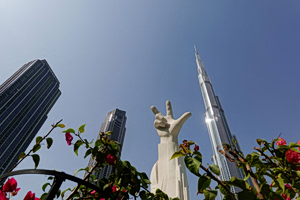
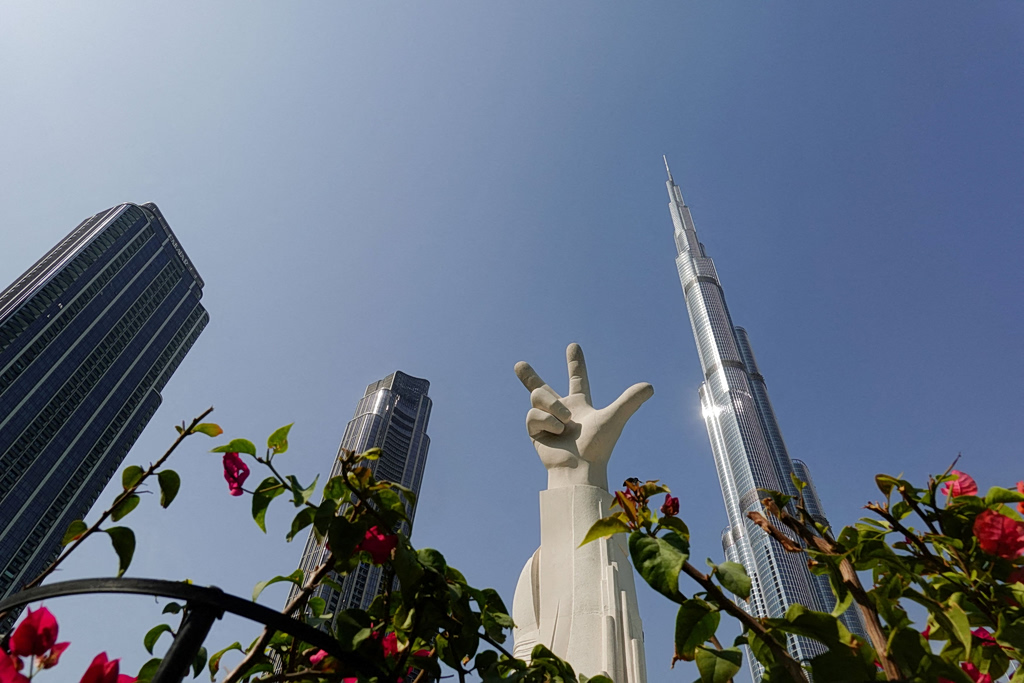
Leaders have gone to great lengths to make the place appeal to Westerners. It boasts the world’s tallest building, deepest diving pool and longest urban zipline. Ski Dubai, an indoor ski resort in the Mall of the Emirates, offers an “ultimate penguin experience” where guests can feed its resident flightless birds, despite summertime temperatures outside that sometimes surpass 115 degrees Fahrenheit.
There are now 19 restaurants with Michelin stars and more than 170 five-star hotels.
The city’s contemporary roots go back to the late 1970s, when the construction of a deep-sea port at Jebel Ali and free-trade zones that eliminated taxes and local ownership requirements drew the first wave of immigrants and expats.
The establishment in 1985 of government-owned Emirates airline, now among the world’s largest long-haul carriers, was another milestone, followed by a boom in hotel and apartment construction, turning Dubai into a real-estate and tourism powerhouse.
The 2008 financial crisis burst Dubai’s real-estate bubble, forcing a bailout from Abu Dhabi, the U.A.E. capital with much deeper oil reserves. But when the Arab Spring broke out a few years later, Dubai benefited , as investors looked for a safe haven. Those investors eventually included wealthy individuals from places such as Lebanon, Syria and, more recently, Russia and Ukraine.
Emirati leaders tightened enforcement on protest and expression, and extended crackdowns on religious groups such as the Muslim Brotherhood. Human Rights Watch criticized the government for using “an arsenal of invasive surveillance tools,” including “by directly monitoring messages, emails, and mobile devices in the U.A.E. and beyond its borders.”
After Covid briefly shut down the city, leaders took additional steps to make the place appealing, further liberalizing social norms and even moving the weekend from Friday-to-Saturday, as is customary in many Arab nations, to Saturday-to-Sunday.
Dubai’s population surged to around 4 million at the end of 2024—roughly 90% of them expats—from less than 1 million at the turn of the century. Last year, the U.A.E. attracted a record 9,800 millionaires, bringing over $60 billion with them—the highest net inflow globally, followed by the U.S. at 7,500 relocating millionaires, according to estimates by advisory firm Henley & Partners.
Disaster strikes
That idyllic illusion was shattered when Iran began launching hundreds of drones and missiles at Dubai and other parts of the Gulf.
KPMG chartered planes to evacuate staff. Google rushed to extract more than 1,000 of its people who were in Dubai for a corporate sales event. Some banks and hedge funds booked contingency accommodations in remote desert areas that wouldn’t be a target for Iranian drones.
Dubai-based employees at Wall Street banks were told to work from home. Deutsche Bank and asset manager Franklin Templeton suspended travel to the region. A tennis tournament, held just over an hour’s drive from Dubai, was abruptly canceled after players dashed off court following an Iranian drone attack nearby.
For some residents, the sudden danger has deepened their appreciation for Dubai, which they say has welcomed diversity and created an environment where entrepreneurs can thrive.
“I am not running away,” said Federico Ferraro, co-founder of Quiqup, a B2B platform that helps provide logistics for e-commerce businesses. He moved to Dubai years ago to expand the business after launching in London and came to love how efficient and well-managed it is, he said.
The drones and missiles are “all a bit of a shock,” he said. But he’s still hoping to get a long-term visa and buy a home in Dubai. “I still feel safe.”
Others have been struck by the sense of calm on the ground. Thomas Hennelly, a 30-year-old Irish expat who moved to Dubai in January to expand his hedge-fund recruitment firm, said he watched missiles and drones cut across the sky from the balcony of his temporary rental in the city’s man-made waterfront district packed with glitzy skyscrapers.
When smoke billowed from the damaged Fairmont The Palm hotel, he decided to hunker down. And yet the streets are still filled with traffic, he said, and some people are still relaxing on the beaches.
Money matters
Dubai only needs to lose some of its expats and investment to hit confidence in the city—or any other part of the Gulf—as a safe place to park wealth.
By the end of 2025, the Dubai International Financial Centre hosted nearly 300 banks and more than 100 hedge funds. Last year JPMorgan Chase, America’s biggest bank, expanded its Dubai outpost, relocating bankers from London.
Many came on the assumption that Dubai was as predictable as London or Singapore.
“Nobody will actually park wealth under the illusion that there’s no geopolitical friction,” said Ryan Lin, a director at Singaporean law firm Bayfront Law. “New money coming in—I think that will be tough.”
Since the war began, Lin said he’s fielded calls from roughly 20 of his ultrawealthy clients—including some who have obtained Dubai’s so-called golden visas for long-term residency—who have asked about moving assets out. Two have pushed to move money urgently.
“They’ve said, ‘I want to move now, what’s the fastest you can do?’” Lin said. “They are thinking of moving some of their assets from Dubai over to Singapore.”
Compounding the anxiety is the realization that Dubai and other parts of the Gulf weren’t made for conflict. Unlike Israel, the U.A.E. has no established network of shelters or carefully calibrated alert levels.
“Many people in finance were looking for shelters and recognized there are not many,” said Hussein Nasser Eddin, chief executive of global security firm Crownox, which has evacuated nearly 4,000 people out of the region since the conflict began. His company pinpointed underground parking lots and hotel ballrooms as possible shelter areas. “It showed a lack of awareness.”
Al Olama, the Emirati minister, said many structures, including parking garages, offered shelter across the city. He acknowledged that public awareness could have been better.
Cracks in the economy are already showing.
The attacks arrive at the peak of a multiyear real-estate boom. Dubai residential real-estate prices jumped 60% between 2022 and the first quarter of 2025, according to Fitch Ratings, leaving the market exposed to a possible correction.
Commercial real estate could also feel the impact. Citi evacuated several buildings in the U.A.E. Wednesday and said its employees have fully shifted to working from home, the same day Iran threatened to attack banks in the region following a missile strike on a Tehran bank.
Tourism, another key economic driver, is taking a hit, with tens of thousands of vacation-rental bookings already canceled. According to Tourism Economics, the conflict risks triggering up to a 27% annual drop in international visitors to the Middle East this year, translating to as much as $56 billion in losses in visitor spending.
Nabil Milali, portfolio manager at Edmond de Rothschild Asset Management, said his firm, which has a Dubai office, has been fielding client inquiries about the region’s future since the earliest hours of the conflict.
“It will have a big impact on the attractiveness, especially of the U.A.E., because they had this investment pitch of describing it like the Switzerland of the region, a safe place for international investments,” he said.
“Now, the geopolitical risk premium is high and will stay on.”
Write to David S. Cloud at david.cloud@wsj.com , Georgi Kantchev at georgi.kantchev@wsj.com , Omar Abdel-Baqui at omar.abdel-baqui@wsj.com and Caitlin McCabe at caitlin.mccabe@wsj.com