
 Μake us preferred on Google
 Over the past two months, Prime Minister Kyriakos Mitsotakis and the wider government leadership appeared to be laying the groundwork for an early election, before signs emerged that the vote will likely be pushed back to spring 2027 instead. That has eased the campaign’s pace, but it has done little to calm the fight inside the ruling New Democracy party over who will run, and where.
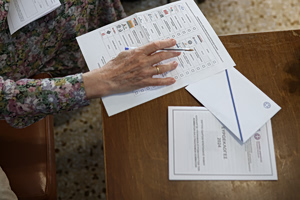
The tension centers around the preference-based voting system used in Greece, which allows voters to choose specific candidates by placing a cross next to their preferred candidate’s name. In particular, competition in Athens and Thessaloniki, Greece’s two largest multi-seat constituencies, is running high. Both are packed with senior ministers vying for what polling suggests will be a shrinking number of seats, and their size draws far more contenders than smaller, less prominent districts typically see.
Why the stakes are higher this time
That competition is being sharpened further by polling that shows New Democracy’s support sliding toward the level it managed in the 2024 European Parliament election, well below its result in the 2023 general election. A Metron Analysis survey for TV channel MEGA, published on July 2, projected a nine-party Parliament with New Democracy dropping to 120 seats, from the 158 it won in 2023.
Add in the routine turnover that follows every Greek election, and roughly a third of the party’s sitting lawmakers stand to lose their seats altogether, a prospect that has only intensified the jostling between incumbents and newcomers for a place on the ballot.
Four constituencies show just how high the stakes have become: the Athens B1 Constituency (North), the Athens B3 Constituency (South), the Athens A Constituency, and the Thessaloniki A Constituency.
Athens B1 Constituency (North): the government spokesman shakes up the order
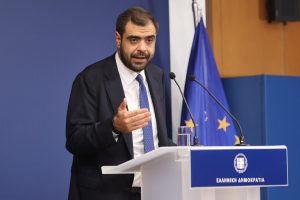
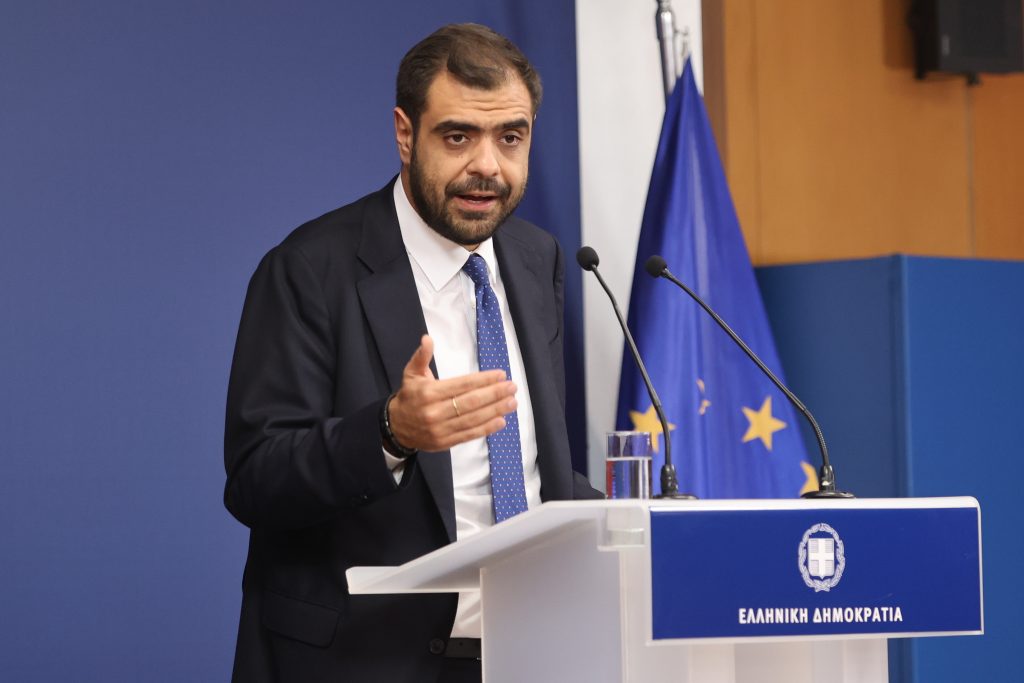
The Athens B1 Constituency, in the north of the capital, looks different than it did in 2023. Government spokesman Pavlos Marinakis will enter the race, while Theodoros Rousopoulos, who has served in the past as president of the Council of Europe’s Parliamentary Assembly, may choose to run in the State Constituency list instead, a separate slate of candidates chosen directly by party leadership rather than elected by preference vote in a district.
New Democracy won 47.32 percent of the vote in the B1 constituency in 2023, which translated into seven seats. Deputy PM Kostis Hatzidakis topped the preference vote, followed by Adonis Georgiadis, Niki Kerameus, Dimitris Kairidis, Zoi Rapti, Rousopoulos and Nikos Papathanasis, a lineup that today includes four cabinet ministers, a former minister who is now the party’s parliamentary spokesman, a former deputy minister and a former Council of Europe assembly president.
TO BHMA has learned that the district’s latest polling puts Marinakis among the top three candidates. Hatzidakis leads the pack, with Georgiadis and Marinakis close behind in an order that is still unsettled. Kerameus sits fourth, Kairidis just behind her, and Rapti and Papathanasis are vying for fifth and sixth place.
Current polling suggests the B1 constituency will elect five or six New Democracy lawmakers, which means Papathanasis and Rapti are, in effect, fighting for the same seat. Two further names could complicate the picture. One is Thodoros Skylakakis, a former minister whose possible candidacy has yet to gain visible traction. The other is Giorgos Patoulis, the former regional governor of Attica, who is not expected to finish high enough to be competitive and may run instead for mayor of Marousi, a decision neither he nor the party has made public.
Marinakis’s strong showing is reshuffling alliances inside the constituency too. Georgiadis is said to be quietly backing him, much as he backed Papathanasis in the last election, with whom he remains close. Reports of tension between Marinakis and Hatzidakis, who work together at the prime minister’s office, have been denied by people close to both men.
Kerameus draws particular strength from women voters, while Rapti is said to run one of the district’s most organized campaign operations. Kairidis’s recent high profile, meanwhile, is widely read inside the party as an attempt to lock in a top-five finish and avoid having to fight for what could be a sixth and final seat.
Athens B3 Constituency (South): a tight race below the top four
Polling there points to another close contest, especially for the seats below fourth place. New Democracy won 42.32 percent of the vote in the B3 constituency in 2023 and took nine seats: Nikos Dendias, Takis Theodorikakos, Konstantinos Kyranakis, Vasilis Spanakis, Dionysis Hatzidakis, Charis Theoharis, Giannis Kallianos, Anna Karamanli and Sofia Voultepsi, in that order, a slate so packed with ministers it plays like a full house in poker.
One new name has already joined the race: Andreas Loverdos, the former PASOK MP and minister who left the party in 2023, seems to have secured a spot in the New Democracy elctoral ballot. Recurring rumors that singer Konstantinos Argyros might run have been dismissed as false, although further last-minute additions, cannot be ruled out. Energy Minister Stavros Papastavrou is one possible addition, if he is not placed on the state list instead.
New Democracy could lose one or two seats in the B3 constituency, based on recent polling. Defense Minister Dendias leads the pack, followed, as in 2023, by Theodorikakos and Kyranakis, though the gaps between them have narrowed considerably. Spanakis, Voultepsi and Loverdos, who is reportedly a genuine contender for a winnable seat, are contesting fourth through sixth place.
Behind them come Theoharis, Kallianos and Karamanli, in that order, though the gaps separating them, both from each other and from the group just ahead, are narrow. Tasos Gaitanis, a former general secretary for research who was the first alternate candidate in 2023, is also in the running. One analyst familiar with the district’s numbers said nobody can say with confidence who will hold third place or below, since small shifts could still upend the order.
Athens A Constituency: four ministers and a crowded top of the ticket
The Athens A Constituency was renamed the Electoral District of the Municipality of Athens a few months ago, though it is still widely known by its former name. New Democracy candidates are expected to fight especially hard for a spot on the ballot there this time. The party currently holds six of the district’s 13 seats but expects to elect only four, or at most five, this time, in a race featuring four senior cabinet ministers who have already spent two elections fighting for the top of the ballot.
In 2023, Kyriakos Pierrakakis, the finance minister, got the most votes, followed by Vasilis Kikilias, Olga Kefalogianni and Thanos Plevris. It was Pierrakakis’s first run for Parliament, and finishing first was widely interpreted inside the party as having boosted his prospects as a future contender for its leadership. Kikilias, the minister of maritime affairs and insular policy, has similar ambitions and finished second. Kefalogianni, the tourism minister, had previously led the ballot herself but slipped to third this time, while Plevris, the migration minister, climbed to fourth after ranking near the bottom in earlier elections.
Parliament Speaker Nikitas Kaklamanis, who has represented the capital since 1990, appears likely to step back from the constituency race this time. He has signaled he would prefer a spot on the state list but has not yet secured the prime minister’s approval. The party’s sixth seat in the district belongs to the academic Angelos Syrigos, whose standing is said to have risen inside New Democracy thanks to his frequent television appearances on geopolitical issues, particularly Greek-Turkish relations.
Expected new candidates include party’s spokesperson Alexandra Sdoukou, who previousle served as deputy environment and energy minister, and whose candidacy has already been formally announced. Actor and regional councilor Thanasis Viskadourakis, whose own candidacy announcement was postponed once the election timeline shifted. Foteini Pipili, the top alternate from the last election, has not said whether she will run again. Finance Ministry spokesman Omiros Tsapalos and the lawyer Paola Damianou are both expected to be candidates once more.
Thessaloniki A Constituency: room for new faces
New Democracy’s support in the Thessaloniki A Constituency trailed its national average in 2023, 35.28 percent against 40.56 percent nationally, though the party still won 8 of the district’s 17 seats. One of those seats was held by Mitsotakis himself, who ran there in addition to his home constituency, as Greek election law allows party leaders to do. If current polling holds, New Democracy is likely to win five or six seats this time, sharpening the contest between sitting lawmakers and a wave of new candidates hoping to break onto the ballot.
Among the sitting MPs, the four who drew the most electoral support last time, were Stavros Kalafatis, Kostas Gkioulekas, Elena Rapti and Anna Efthymiou. They all now hold deputy ministerial posts and are said, according to people familiar with local polling, to hold a clear edge over three other colleagues: Dimitris Kouvelas, Stratos Simopoulos and Diamantis Golidakis.
That order could still be reshuffled. Three government officials who have received the party’s blessing to run are entering the race: Athanasios Tsouras, a lawyer who resigned as general secretary for public property to become a candidate; Yiannis Papageorgiou, an aide at the prime minister’s Thessaloniki office; and Nikos Papaioannou, a deputy minister and former rector of Aristotle University. Also likely to run is Afroditi Nestora, who run in previous elections and who was recently the target of an arson attack that killed her mother. Some reports suggest she could this time be placed in a winnable position on the state list rather than run in the constituency.
Behind the scenes, there is talk that Minister for Rural Development and Food Margaritis Schinas could be added to the ballot in order to strengthen the party’s offering in Thessaloniki, though other sources suggest he may run instead in neighboring Chalkidiki, where he hails from. Justice Minister Giorgos Floridis, who was previously elected in Kilkis with PASOK, and Deputy Infrastructure Minister Nikos Tachiaos have also been mentioned as possible candidates in the district, though senior government circles, where the final decisions will be made, have not confirmed either candidacy.