 Μake us preferred on Google
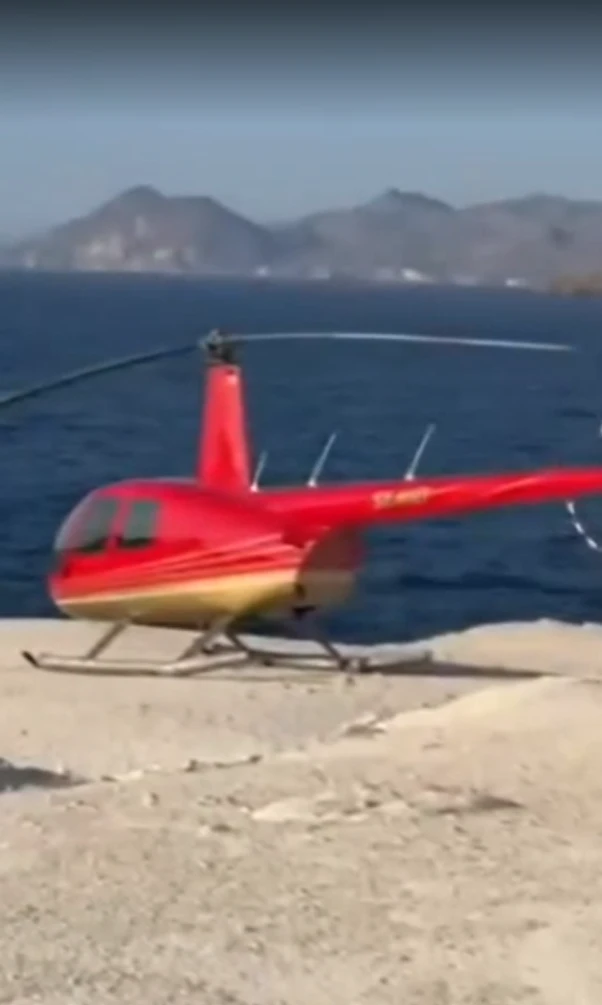
 Uproar has broken out over footage showing a helicopter landing on the rocks of Sarakiniko, the well-known beach on Milos, so its passengers could get out and swim. The incident took place on Friday, August 7, and has since drawn public criticism as well as a criminal inquiry from the prosecutor’s office on Syros, which has opened an investigation.
According to the footage and the information released so far, the helicopter landed directly on the rock formations at Sarakiniko in the afternoon. The passengers got out, walked to the water and swam, then boarded the helicopter again and left. The video was released by a Milos business owner, who confirmed it was authentic and had not been generated or altered with artificial intelligence.
View this post on Instagram
Two authorities are investigating
Greece’s Civil Aviation Authority said it has opened a formal review of the landing, citing its oversight powers under Law 4757/2020, the country’s aviation code. Investigators are examining whether the flight complied with standard procedures, flight rules and operational requirements. Both the pilot and the helicopter’s owner had been summoned to appear before the Civil Aviation Authority on Monday to account for the landing, but neither appeared. Their lawyer requested a postponement until Wednesday or Thursday to allow for time to prepare.
The operator has defended the landing, arguing that there are no restrictions under the current legal framework as no one was endangered and no one on the beach was disturbed.
The Civil Aviation Authority also said it is revising presidential decree 19/2009, which governs helicopter transport in Greece, with added focus on flight safety.
Separately, the prosecutor’s office on Syros, which has jurisdiction over the Cyclades, ordered a preliminary inquiry into the landing on its own initiative. Investigators have been instructed to collect the evidence needed to determine whether charges should be brought against those involved.
A pilot defends the landing
George Chiotakis, a helicopter pilot and friend of the operator, defended the landing in comments to Mega TV, calling the decision reckless and provocative, but not illegal. He said the operator had initially filed a flight plan for Alykes, elsewhere on Milos, then asked air traffic control for permission to land at Sarakiniko instead, and received it. That approval was lawful, Chiotakis argued, because the beach does not fall within a Natura zone. Under current rules, he said, helicopter landings are prohibited only in Natura zones or on private property without permission, and would trigger arrests only if they caused injury or damage to the ground. He added that the operator maintains he landed a safe distance from swimmers and caused no danger or disturbance.
Chiotakis argued that Sarakiniko should be formally designated a protected area, something he said local authorities could accomplish simply by writing to the Civil Aviation Authority. He also pointed to a broader infrastructure problem: of Greece’s 60 official heliports, he said, roughly 90 percent are no longer certified, due to issues such as damaged fencing, broken lighting, expired fire safety equipment or overgrown vegetation.
Part of a wider dispute over Sarakiniko
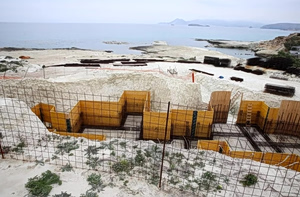
The incident comes just months after residents and officials on Milos publicly clashed over construction activity near Sarakiniko, a dispute that had already raised questions.
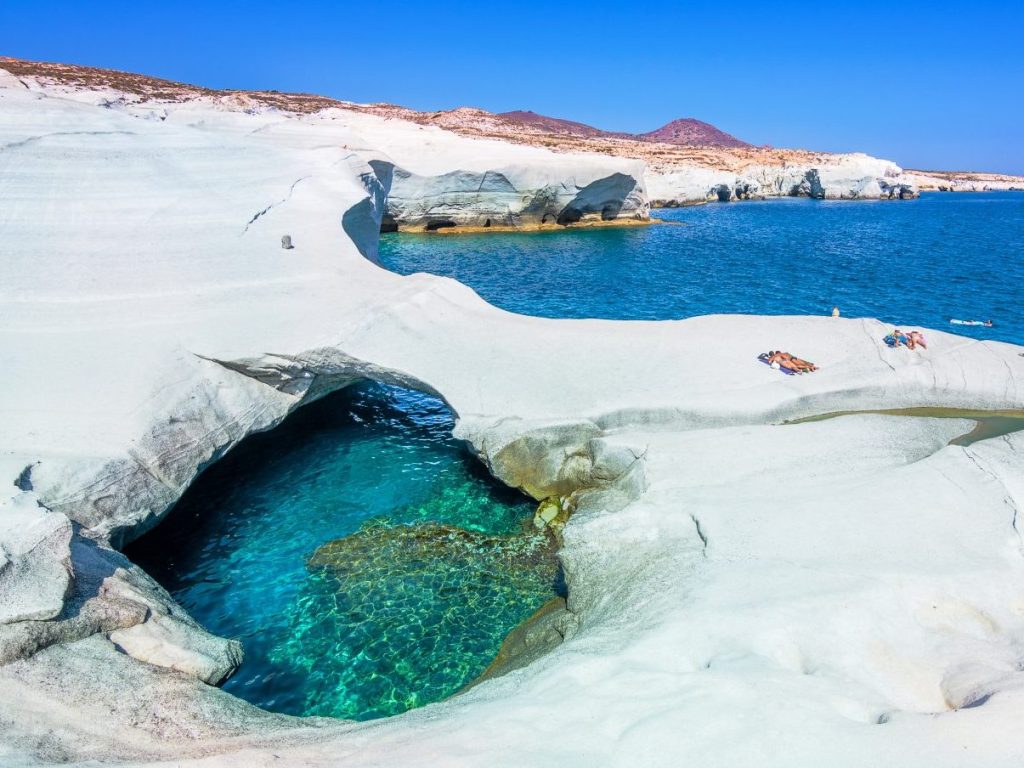
Sarakiniko is known locally as Milos’s “lunar landscape,” a stretch of bare white volcanic rock on the island’s northern coast.