
 Μake us preferred on Google
 Iran’s leadership has made a high-stakes calculation in its showdown with President Trump : maintaining control over the Strait of Hormuz is a nonnegotiable red line.
By asserting authority over a critical waterway for global crude-oil flows, Tehran is betting that its ability to inflict pain on the American economy is its best leverage to avoid future military action from the U.S. and Israel. With gasoline prices and inflation elevated, Tehran believes Trump will ultimately accept its terms ahead of fast-approaching midterm elections that could determine the future of his presidency.
Centering strategy on controlling the Strait of Hormuz is an extraordinary gamble. It assumes Trump will prefer a messy, volatile stalemate over an all-out war. In playing this card so aggressively, Tehran risks miscalculating Washington’s breaking point and threatening its own economic survival.
“Their maximalism will contribute to their isolation in the long run,” said Behnam Ben Taleblu , an Iran expert at the Foundation for Defense of Democracies, a policy organization that opposes Iran’s rulers.
There are fissures from within Iran’s government on control of the strait.
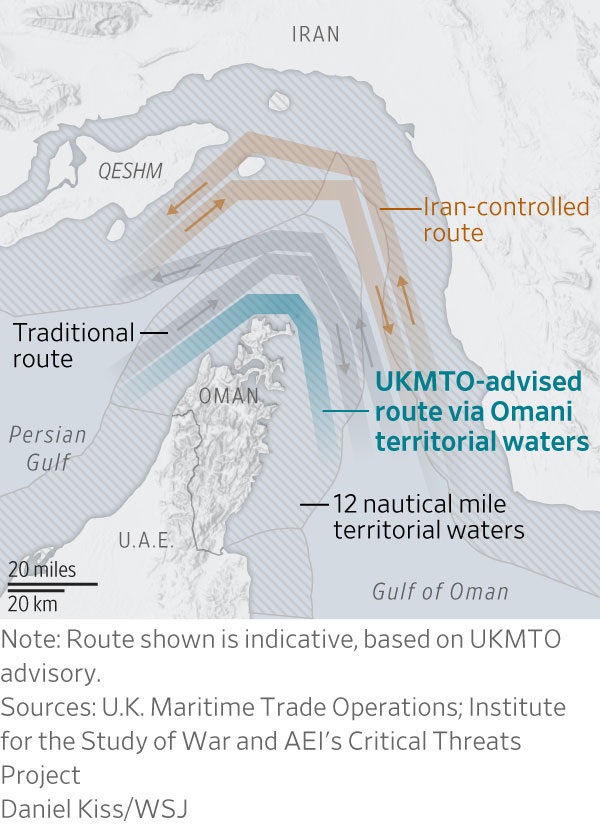
The hard-line Islamic Revolutionary Guard Corps sees the control of Hormuz as its most important tool to exert pressure on the West following the degradation of its nuclear program and its militia proxies over the past few years, said Iranian and Arab officials and a Revolutionary Guard adviser. The Iranian military has suffered major losses since the U.S. and Israel launched a surprise attack on Feb. 28, but it has been able to bog Washington down by harrying shipping in the strait and targeting U.S. assets in the Persian Gulf.
Iranian moderates have become increasingly worried that the U.S. blockade implemented in response to Iran’s attacks on Hormuz is bringing Tehran’s economy close to collapse, the officials and the adviser said.
The International Monetary Fund has projected that Iran’s economic growth will contract 6% in 2026. Its annual inflation rate is about 69%, the IMF said, while average Iranians face fuel shortages and other wartime deprivations.
Iran’s chokehold on the strait has cut deeply into global petroleum supplies, with Persian Gulf oil flows having fallen to around 36% of prewar levels. Yet oil prices never reached sustained levels above $100 a barrel, which could have punished the U.S. economy enough to force capitulation. Even with the Iran-backed Houthis bottling up Saudi oil in the Red Sea, crude prices were below $80 a barrel Tuesday.
Some Gulf oil has been rerouted to avoid the strait. A limited number of ships have squeezed through Hormuz by cutting deals with Iran, or by going dark and making the risky crossing.
“There were a lot of factors that provided cushion,” said Barbara Leaf , who was the State Department’s top Middle East official during the Biden administration. “The oil market was well oversupplied at the outset.”
She said that after Israel and the U.S. struck Iran’s nuclear facilities in June 2025, China was “reading the tea leaves” and starting to stockpile oil.
“There was demand destruction,” she said.
Though Trump has backed off on his threats of attacks equivalent to World War II, the U.S. maintains a naval blockade of Iran and reimposed sanctions that make trading its oil difficult. Iran’s own oil exports rely on the passage through the strait. Long-term disruption deprives the Islamic Republic of its primary revenue stream while accelerating efforts by neighboring Gulf states to build bypass routes.
China, one of Iran’s most important partners, hasn’t come to its rescue. Beijing has dialed back oil purchases, keeping prices down, and shows little sign of picking back up.
But as countries deplete their stockpiles at record rates, there could be sustained price increases by the end of the year, analysts said. U.S. emergency oil reserves hit 40-year lows this summer.
Trump has said Iranian leaders are eager for a deal that would open the strait, lift the American naval blockade and eventually limit Tehran’s nuclear program—the president’s latest war aim.
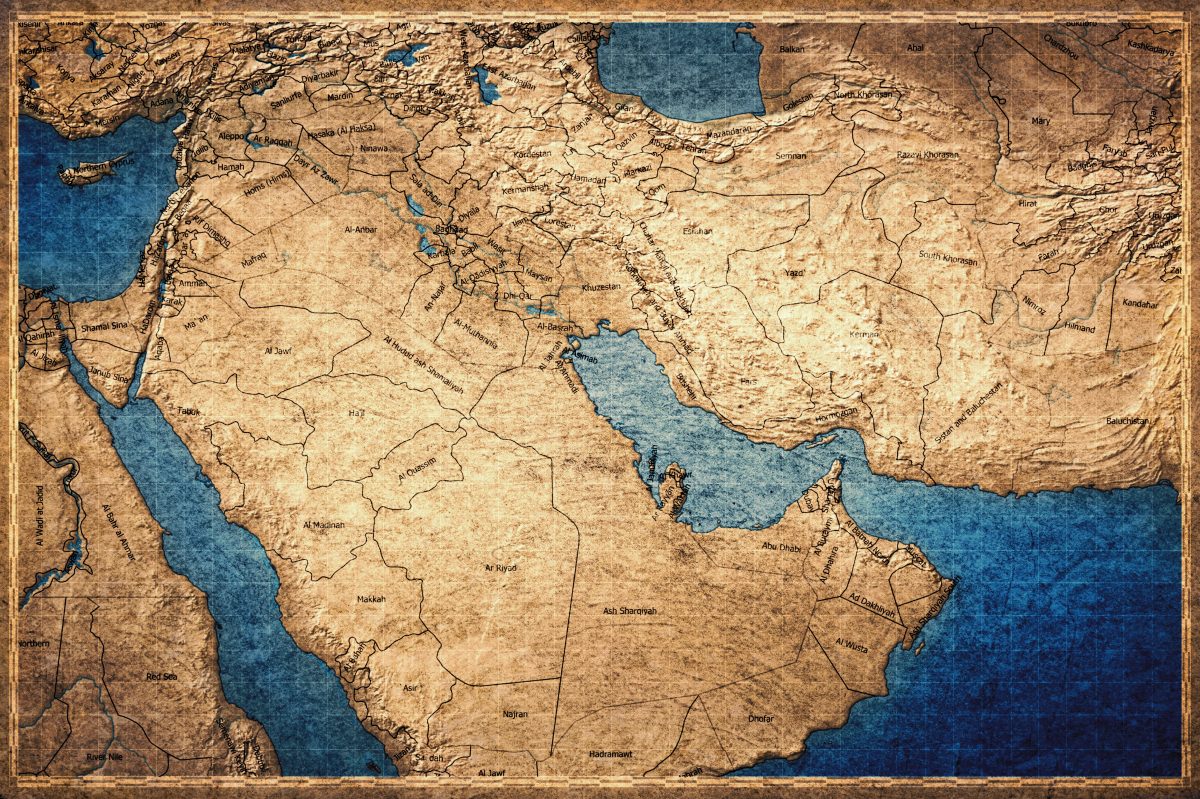
Iran has said there are no talks with the U.S. Instead, Tehran and Oman—whose coast lies on the southern edge of Hormuz—are in talks to create a temporary channel for ships to pass safely. Tehran has demanded the collection of tolls from ships transiting the strait. A proposal under discussion would allow Persian Gulf-bound ships to enter through Iranian waters while vessels leaving would pass through Omani waters without paying fees. Mediators in Egypt, Pakistan and Qatar are hopeful that once there is a temporary fix for the strait, the U.S. and Iran might be able to get back to the negotiating table.
On Tuesday, Secretary of State Marco Rubio provided insight into the administration’s hope for a two-step negotiation that, eventually, ends with severe caps on Iran’s nuclear advancements.
“There’s the big deal, which is the one that has to do with their nuclear ambitions,” Rubio said.
“The immediate deal and the one that you’ve seen a lot of focus on is the straits,” the secretary added.
Rubio’s remarks echoed Trump’s desire for an agreement to reopen Hormuz fully before restarting nuclear talks.
U.S. officials privately noted that Washington is pursuing a similar course that led to June’s “memorandum of understanding”—ceasefire first, then negotiations—before Trump grew impatient with diplomacy and relaunched attacks on Iran.
Over the long term, Iran’s leverage over the global economy and its Persian Gulf neighbors could diminish as Saudi Arabia, the United Arab Emirates and other large oil producers successfully create alternative routes for their oil that bypass the Strait of Hormuz.
“They are all looking for bypasses,” Leaf, the former senior State Department official, said of Arab Gulf states.
Those bypasses all lie in striking range of Iranian missiles and drones. “If the Iranians are fully committed to laying waste to Gulf energy infrastructure, they could do it, and that will outrun the build-out that any of these countries are undertaking,” Leaf said.
Several ships have been struck in the Strait of Hormuz this week. Other ships were hit in the Red Sea and the Mediterranean Sea in the past month as the war has widened.
Arab Gulf states are pushing to bring the Strait of Hormuz back to the old status quo. It isn’t the payment of tolls they are worried about, but the political leverage that it gives Iran over them.
“Iran would be able to let Saudi tankers in one day and not the next,” Leaf said. “That is a nightmare scenario for Gulf states.”
Write to Omar Abdel-Baqui at omar.abdel-baqui@wsj.com , Benoit Faucon at benoit.faucon@wsj.com and Alexander Ward at alex.ward@wsj.com