 Μake us preferred on Google
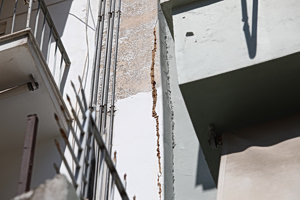
 Residents of Exarcheia, a central Athens neighborhood, are increasingly concerned about the potential impact of Metro Line 4 construction on buildings in the area, following recent subsidence and serious damage reported at apartment buildings in nearby Kypseli.
Posters have appeared across Exarcheia over the past week, reflecting residents’ concerns as they await the resumption of tunneling work beneath their homes. The tunnel-boring machine, known in Greece as a “metro mole,” is expected eventually to reach the neighborhood.
The machine has remained idle in Kypseli since May 8, 2026, after serious damage appeared in apartment buildings during construction. It is not yet known when tunneling will resume.
The first findings by the Technical Chamber of Greece, which is examining the causes and extent of the building damage, are expected by the end of this week, according to information cited by the report. Meanwhile, the contractor has submitted a new technical study to Elliniko Metro, the state company overseeing the project, concerning the continuation of tunneling works.
A separate report prepared by engineers appointed by the Municipality of Athens on behalf of Kypseli residents referred to damage to structural elements of buildings and differential subsidence. According to the report, measurements exceeded the safety threshold by almost four times.
Residents question safety studies
The concerns in Kypseli, which have intensified over the past four months, are due to be discussed Wednesday at a meeting of the Athens Municipal Council. Representatives of Exarcheia residents are also expected to attend.
Chrysoula Papageorgiou, an Exarcheia resident who has participated since 2022 in the “No Metro at Exarcheia Square” residents’ assembly, said one of the main concerns is the lack of studies examining underground and surface water.
Residents first raised the issue in an appeal to Greece’s Council of State, the country’s highest administrative court, four years ago, she said.
Papageorgiou also said no structural study has been carried out on buildings in the area, including listed buildings, despite Exarcheia’s architectural heritage and the presence of numerous notable neoclassical buildings dating from the late 19th and early 20th centuries.
One of them is the Blue (Apartment) Building, constructed in 1933 and considered a characteristic example of interwar architectural modernism in Athens.
According to a poster put up by residents, the planned tunnel route and the zone of influence defined by the company would take the tunneling works beneath buildings dating back as far as the late 19th century.
The poster argues that the damage reported in Kypseli was not an isolated development but the expected result of a public project being carried out without what residents describe as specialized studies and methods.
It also claims that the tunnel-boring machine cannot continue along its original route, which residents say creates serious risks for people living in Exarcheia and nearby Neapoli.
Studies examine Exarchia’s ground conditions
Exarcheia residents have commissioned geologists and engineers to study the condition and characteristics of the area’s subsoil.
“The studies show that the subsoil of Exarcheia is more unstable than that of Kypseli,” Papageorgiou said.
Residents are also compiling records of when the neighborhood’s buildings were constructed.
“Many neoclassical buildings, as well as older apartment buildings, are located above the tunnel route. I am afraid that in the future we may face even more dangerous situations than those that occurred in Kypseli,” she said.
The concerns are particularly significant because many of the buildings along the planned route are old, including structures dating to the late 19th and early 20th centuries.
Exarchia Square remains closed
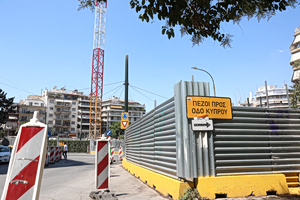
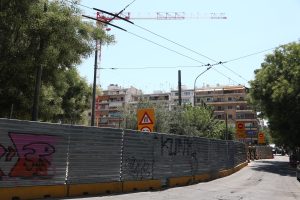
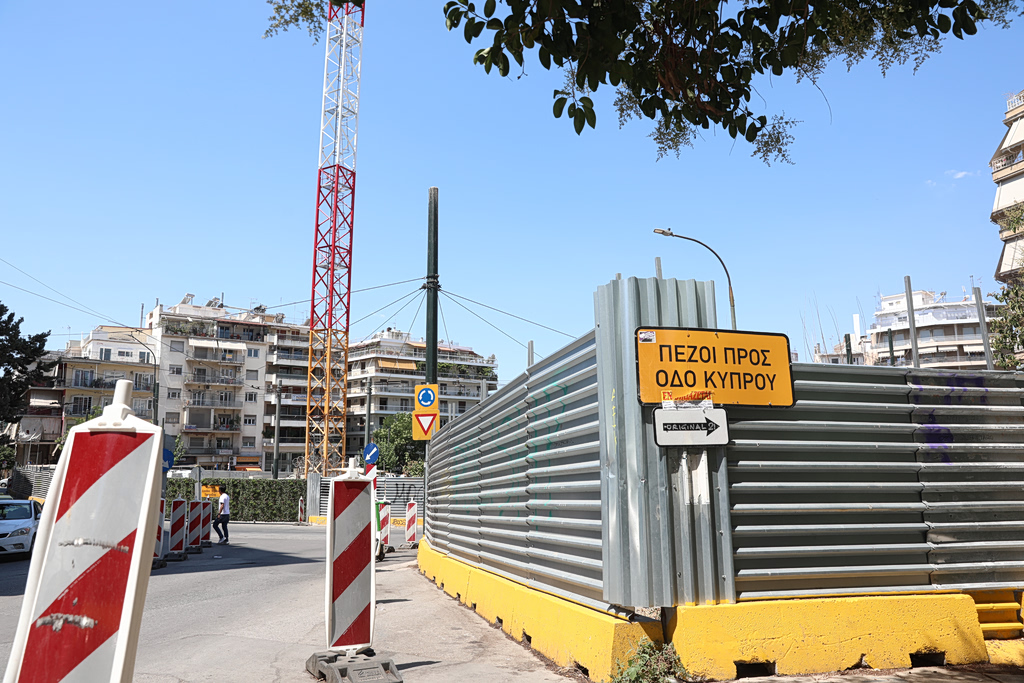
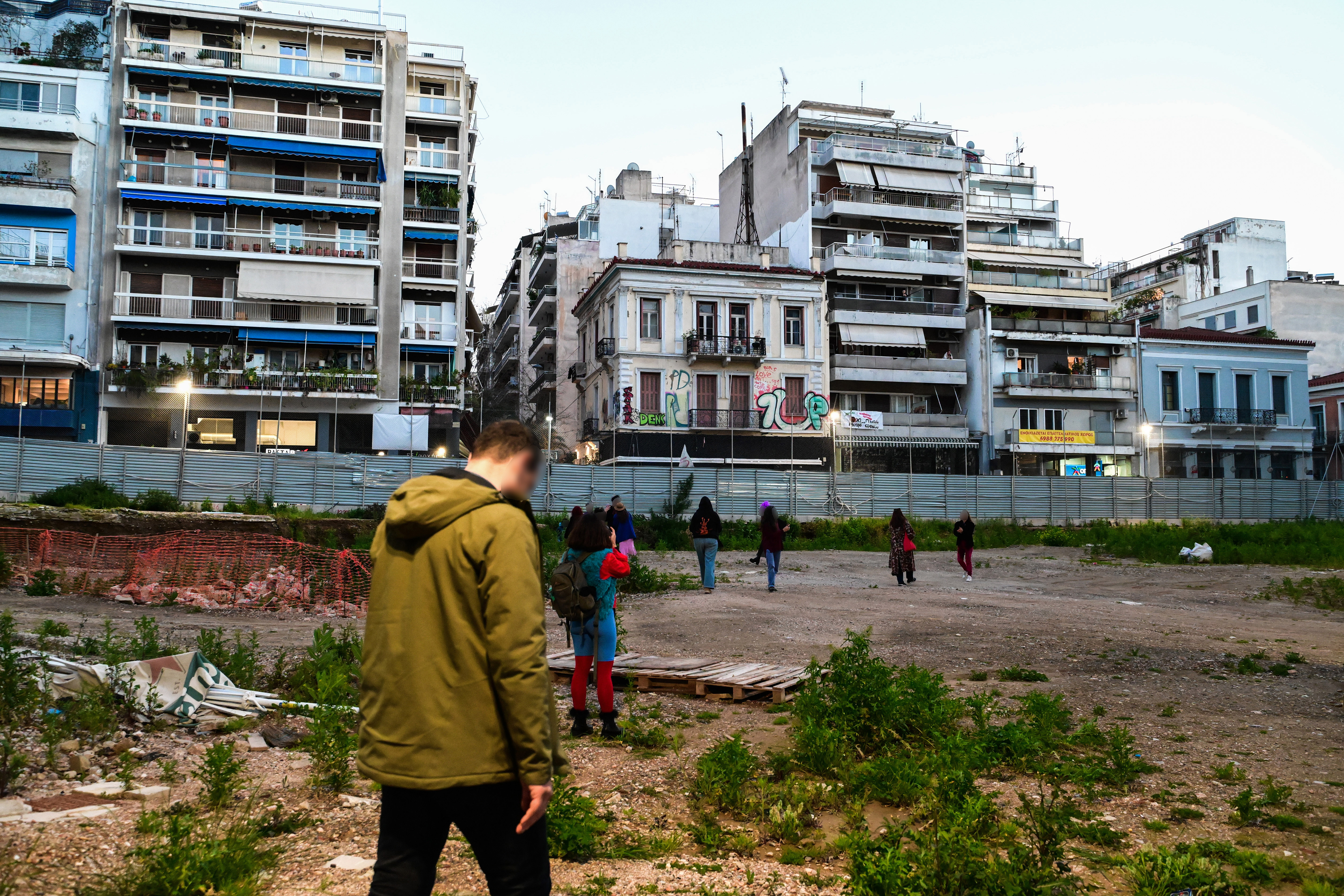
No construction is currently taking place at Exarcheia Square, as the worksite remains inactive. Residents say vegetation has begun to grow back, but the square remains closed and surrounded by metal barriers.
Papageorgiou said the barriers initially obstructed the unobstructed passage of emergency vehicles.
She stated that the construction site had illegally been expanded toward Themistokleous Street, a claim she said was confirmed during an inspection by the Athens First Fire Station.
Residents took the matter to court and won, she said, but the company did not implement the ruling. The residents then arranged for the court decision to be enforced themselves, using their own lawyer, a bailiff and a crew that moved the barrier inward.
The court ruling required the barrier to be positioned five meters from the entrances of apartment buildings, according to Papageorgiou.
For residents, however, the issue extends beyond the current appearance of the square to what will remain of it after construction is completed.
“We are afraid that we will lose our square, the history of our neighborhood, its identity, and we are asking for it to reopen,” Papageorgiou said.