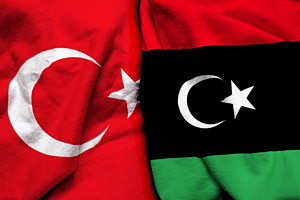
The U.S. State Department has called for good-faith negotiations between the two NATO allies following a move by Libya’s eastern-based parliament to ratify a maritime agreement with Turkey, without taking a position on the deal’s legality.
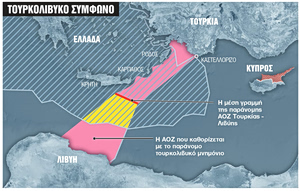
Athens raised concerns over Eastern Libya’s move to ratify the 2019 maritime agreement, warning Security Council members of risks to stability in the Eastern Mediterranean
Athens is turning to international law and diplomatic pressure after Eastern Libya backed the disputed maritime pact, as Israel, Egypt and the EU reject the move and Greece weighs its next steps in the Eastern Mediterranean
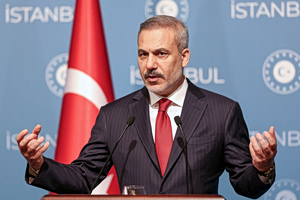
The EU's foreign policy chief told the Turkish FM that the agreement infringes on the sovereign rights of third states, following its approval by Libya’s eastern-based parliament
Egypt says the agreement has no legal effect on its maritime rights, while Israel accuses Ankara of undermining stability in the eastern Mediterranean
The Republican senator says Turkey’s 2019 maritime agreement with Libya threatens U.S. interests and Greece, calling on President Recep Tayyip Erdogan to act like a NATO ally if Turkey is to enjoy the alliance’s benefits.
Israel says the agreement violates the sovereign rights of its close regional allies and accuses Ankara of undermining stability in the Eastern Mediterranean, following its ratification by eastern Libya’s parliament.
The agreement aims to strengthen the four countries’ military capabilities through joint exercises, training, research and development, and closer cooperation between their defense industries.
George Gerapetritis dismissed claims of a diplomatic defeat following the Libyan parliament's approval of the disputed agreement, insisting it has no legal consequences and that Athens is prepared for any eventuality
In remarks to Greek newspaper TA NEA, Turkey's foreign minister said Ankara does not oppose the Great Sea Interconnector but wants written notification of maritime surveys. He also defended Turkey's 1995 casus belli against Greece.
Eastern Libya’s ratification of the disputed 2019 maritime agreement with Turkey is shifting the balance in the Eastern Mediterranean, highlighting Ankara’s growing influence in Benghazi and raising questions over Athens’ strategy in Libya
European Commission President Ursula von der Leyen, only hours after the news, reiterated that the 2019 memorandum infringes on the sovereign rights of third states, does not comply with the Law of the Sea and remains null and void
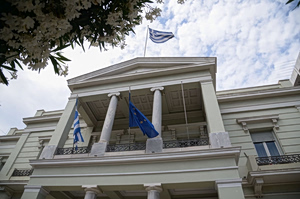
The International Law of the Sea cannot be changed by unilateral, legally unfounded decisions, the Greek foreign ministry stated on Tuesday afternoon, adding that Athens has informed partners and allies and will take all appropriate measures
“Some countries may be upset by this agreement, but what matters to us is our national interest,” a Libyan lawmaker told Reuters, as the eastern-based parliament reversed its 2020 rejection of the deal and restored political ties with Ankara.
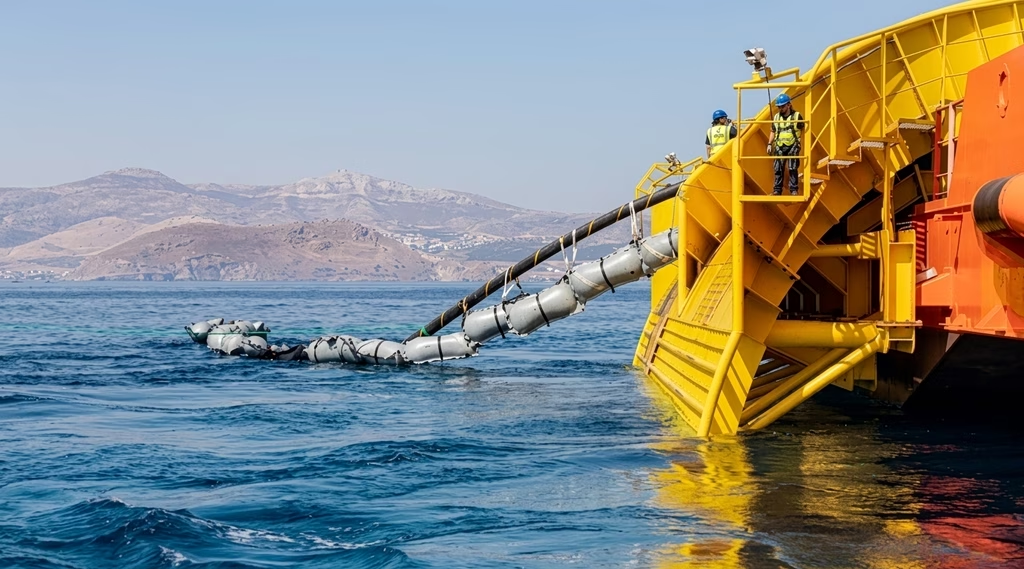
Ankara challenges Athens’ authority over maritime jurisdiction south of Kastellorizo with a NAVTEX as the four-nation Eunomia exercise is scheduled amid preparations to resume surveys for the Greece-Cyprus electricity interconnection
The Greek prime minister praised Marco Rubio’s visit and the strength of U.S.-Greek ties, addressed tensions with Turkey over the Aegean and an undersea electricity cable, and outlined plans for energy investment and defense spending
Ankara’s demand for 'prior coordination' over cable-laying work puts the meaning of ‘notification’ and ‘consent’ at the center of a wider dispute over maritime rights in the eastern Med
Turkey's Defense Ministry escalates its provocative rhetoric over the power interconnection and also takes aim at the military parade in Cyprus
The notice covers waters from Antalya and Mersin to south of the Turkish-occupied areas of Cyprus, where the Oruc Reis will conduct surveys through October 25 as part of plans for a subsea gas pipeline
PASOK MEP and S&D Vice-President Giannis Maniatis pressed Turkey to respect the Copenhagen criteria, highlighting the tragic decline of the Greek minority